Health and Safety Policy for Landscaping Hayes
 This landscaping Hayes health and safety policy sets out the principles and practices used to protect employees, contractors, visitors, and members of the public while work is carried out. Landscaping activity can involve powered tools, manual handling, soil movement, working near water, exposure to weather, and the use of vehicles and chemicals. For that reason, safety is treated as a core responsibility rather than an optional extra. Our approach is based on identifying risks early, taking practical precautions, and maintaining a workplace culture where safe working habits are expected every day.
The purpose of this policy is to prevent injury, illness, environmental harm, and damage to property during all landscaping operations. It applies to site preparation, planting, turfing, pruning, fencing, hedge trimming, hard landscaping, waste removal, and routine maintenance. Everyone involved in the work must understand their responsibilities and follow the required controls. This includes proper planning, correct equipment use, and immediate reporting of hazards. We also expect all workers to act with care, attention, and professionalism when carrying out tasks.
Management is responsible for providing a safe system of work, suitable equipment, and appropriate supervision. Workers are responsible for following instructions, using tools correctly, and raising concerns where conditions may be unsafe. Safety rules are reinforced through induction, ongoing communication, and task-specific briefings. Risk assessments are completed before work begins and reviewed when conditions change. This helps ensure that landscaping operations remain controlled, efficient, and aligned with our commitment to preventing avoidable incidents.
 A key part of this landscape safety policy is hazard awareness. Common risks include slips, trips, and falls on uneven ground; cuts and crush injuries from tools and machinery; strains from lifting heavy materials; and exposure to noise, dust, flying debris, or sharp plant matter. Seasonal weather can also create additional risks, including heat stress, cold exposure, and reduced visibility. We reduce these risks through careful planning, good housekeeping, safe storage, appropriate personal protective equipment, and the use of trained operators for higher-risk tasks.
All machinery and equipment must be selected for the job, inspected before use, and maintained in good working order. Faulty tools are removed from service immediately. Guards, safety devices, and emergency stops must not be bypassed. Workers must wear the correct personal protective equipment, which may include gloves, eye protection, hearing protection, safety boots, and high-visibility clothing where necessary. Landscaping safety depends on attention to detail, so equipment checks and proper use are essential parts of daily operations.
Manual handling is managed through planning, team lifting, mechanical assistance where possible, and training in safe lifting techniques. Loads should be assessed before moving, and assistance must be requested for awkward or heavy items. Materials such as paving slabs, bags of soil, timber, and waste should be stacked securely to avoid collapse. When working with chemicals or treatments, instructions must be followed carefully, containers must be labelled, and storage areas must remain secure. Good organisation reduces risk and supports smoother working conditions.
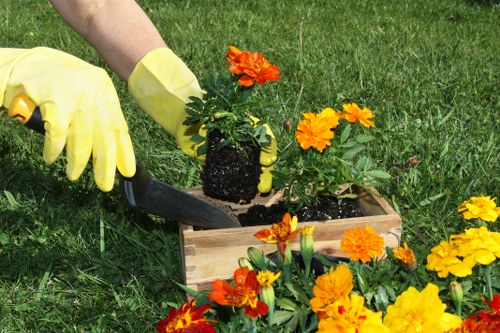 Public safety is equally important. Work areas should be clearly marked when necessary, and access should be controlled to prevent unauthorised entry into active zones. Tools, debris, and waste must not be left where they could create hazards for others. Where work takes place near roads, paths, or occupied properties, suitable barriers, warning signs, and safe movement arrangements must be used. This approach supports a responsible Hayes landscaping service that respects the surroundings while prioritising safety.
Training and competence are central to this policy. Employees are expected to receive instruction before using equipment or undertaking unfamiliar tasks. Supervisors must ensure that only competent people operate machinery, handle chemicals, or carry out higher-risk work. Refresher training is provided where needed, especially when new equipment, processes, or materials are introduced. Safety communication should be clear, practical, and accessible so that everyone understands what is required and can work confidently within the agreed controls.
Emergency preparedness is maintained through sensible planning and a prompt response to incidents. First aid arrangements must be in place, and workers should know how to seek help if someone is injured or unwell. Fire risks, adverse weather, and equipment failure are considered in advance so that responses can be calm and effective. Any accident, near miss, or unsafe condition must be reported and recorded promptly. Learning from incidents helps improve future practice and strengthens the overall safety culture across all landscaping activities.
Responsibilities and Safe Working Standards
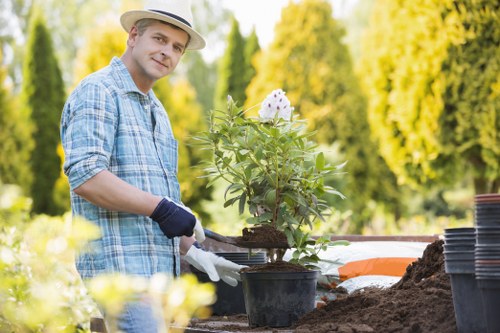 Supervisors have a duty to monitor compliance, correct unsafe behaviour, and ensure that work is paused if conditions become hazardous. Workers must cooperate with safety procedures, keep their work areas tidy, and never misuse equipment. Visitors and subcontractors are expected to follow site rules and remain within designated areas unless authorised otherwise. In practical terms, this means maintaining concentration, avoiding rushed decisions, and respecting the limits of equipment and working conditions. A safe landscaping environment is created through consistent habits rather than one-off actions.
Worksite Controls
Sites should be inspected regularly so that hazards are identified and managed early. This includes checking ground conditions, slopes, access routes, overhead obstructions, nearby utilities, and weather-related changes. Where required, tasks should be postponed if conditions are unsuitable. Waste must be collected, stored, and removed in a way that avoids contamination and reduces trip hazards. Vehicles should be parked safely, with ignition keys controlled and reversing kept to a minimum where possible. These measures support a more secure and efficient approach to landscape maintenance.We also expect a commitment to continual improvement. Policies and procedures should be reviewed after incidents, significant changes, or periodic audits to ensure they remain effective. Feedback from inspections and safety observations should be used to strengthen controls and improve planning. By keeping standards clear and applying them consistently, we can protect people, maintain quality, and deliver reliable results in a manner that reflects responsible landscaping practice.
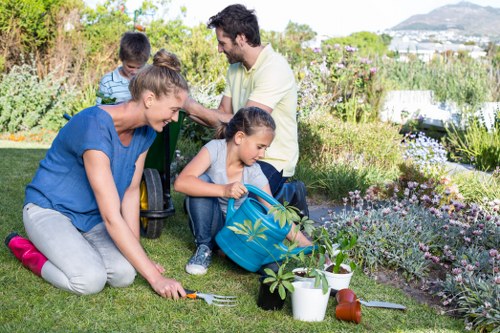 Compliance with this policy is mandatory for all personnel involved in landscaping work. The aim is to create an environment where safety is built into every stage of the job, from preparation to completion. Each task should be approached with awareness, correct equipment, and a shared understanding that hazards can be controlled when everyone contributes. This policy is intended to support safe, organised, and professional working standards across all landscaping operations.
We believe that strong health and safety management protects people, improves working quality, and helps every project run smoothly. By following this policy, all team members help build a safer working culture and reduce the likelihood of harm. Through preparation, cooperation, and consistent attention to risk, landscaping Hayes operations can be carried out with confidence and care.